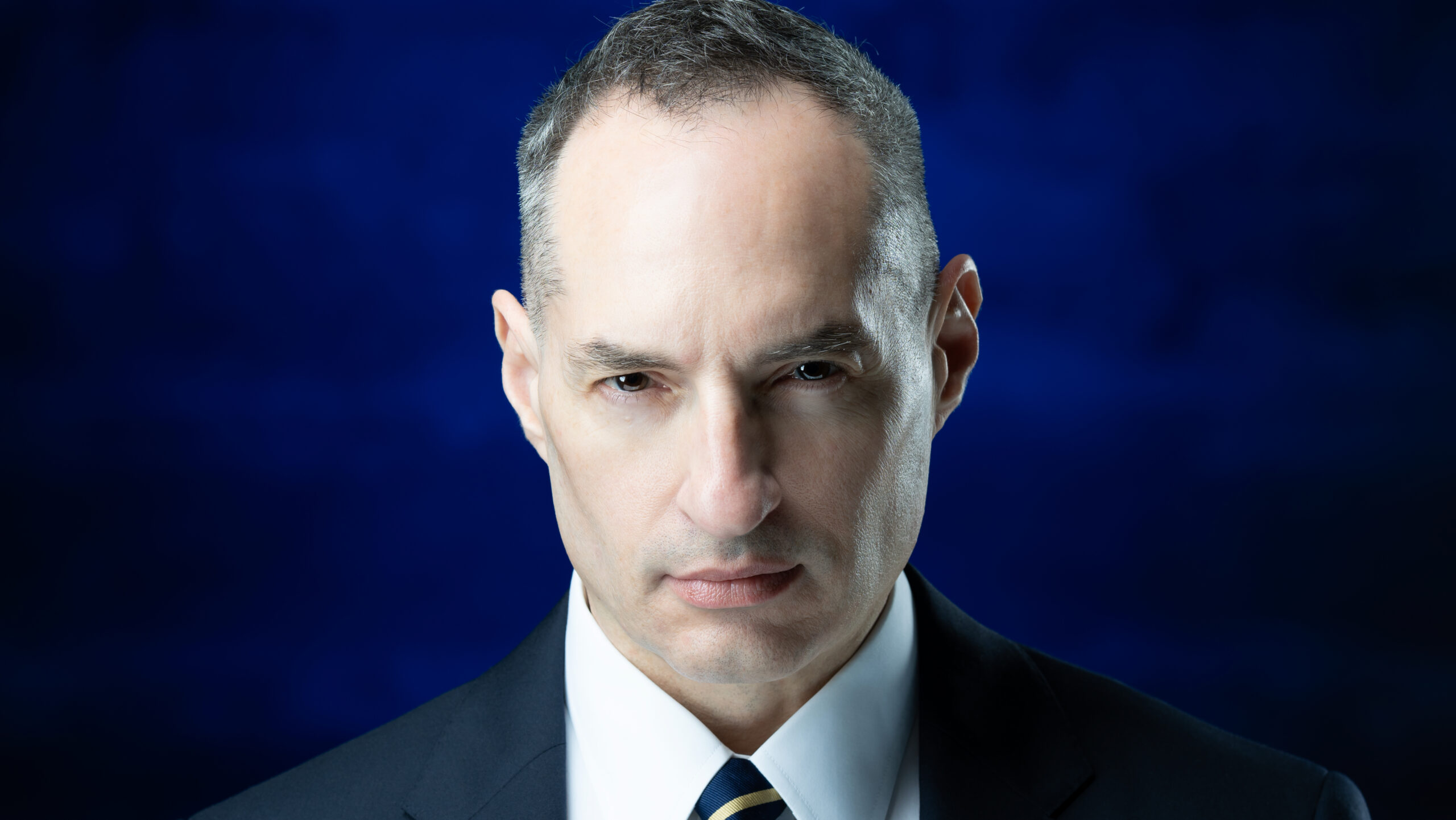
David A. Carrillo received his doctorate from Berkeley Law before joining the faculty as a lecturer in residence and the founding executive director of the California Constitution Center in 2012. The center is devoted to developing scholarship concerning the California constitution and the California Supreme Court. Dr. Carrillo coauthored a casebook on California constitutional law, teaches courses on the California constitution and the California Supreme Court, publishes articles on those subjects, and is editor-in-chief of SCOCAblog.com, a blog about the state high court.
Before starting his academic career Dr. Carrillo was in active practice for 16 years, as a Deputy Attorney General with the California Department of Justice, as a Deputy City Attorney in San Francisco, as a Deputy District Attorney in Contra Costa County, and as a commercial litigation associate in private practice. A member of the California bar since 1995, Dr. Carrillo is admitted to practice before the Supreme Court of the United States, the Ninth Circuit Court of Appeals, and the Northern, Southern, Central, and Eastern District Courts of California.
In October 2023 and October 2019, California Governor Gavin Newsom appointed Dr. Carrillo to two consecutive four-year terms on the California Law Revision Commission, where he was the 2022–23 chair and the 2021–22 vice-chair. He currently chairs the Citrin Center advisory council and serves on the board of the Northern District of California Historical Society and PPIC’s Statewide Leadership Council.
His past charitable and professional board service includes: the Constitutional Rights Foundation, the Bar Association of San Francisco, the California Bar Foundation, the National Advisory Council of the Institute of Governmental Studies, the Foundation for Democracy and Justice, the State Bar Committee on Appellate Courts, the Justice and Diversity Center of the Bar Association of San Francisco, the Volunteer Legal Services Corporation in Alameda County, and the Berkeley Law Alumni Association. Dr. Carrillo chaired the judicial appointments committee of the Alameda County Bar Association, and served on the State Bar Commission on Judicial Nominees Evaluation and the Committee of Bar Examiners, as well as San Francisco and Alameda bar association committees on judicial appointments. He is a life member of the La Raza Lawyers Association (San Francisco and East Bay) and the Hispanic National Bar Association.
Education
B.A., UC Berkeley (1991)
J.D., Berkeley Law (1995)
LL.M., Berkeley Law (2007)
J.S.D., Berkeley Law (2011)
David A Carrillo is not teaching any Law courses in Spring 2025.
Courses During Other Semesters
| Semester | Course Num | Course Title | Fall 2025 | 223.8 sec. 001 | California Constitutional Law |
|---|

Commentary: A New Constitutional Right to Housing Is a House of Straw
David Carrillo and David A. Kaiser of the California Constitution Center at Berkeley Law write, “Supporters of increased affordable housing think a recently proposed initiative constitutional amendment will generate increased state power to impose building mandates on local governments. That’s unlikely to happen, because a new constitutional right to adequate housing has dim prospects in the courts.”
Commentary: Proposition 8—End It and Mend It
David Carrillo and David A. Kaiser of the California Constitution Center at Berkeley Law write, “if the U.S. Supreme Court abrogates Obergefell, as it did Roe, then the now-dormant Proposition 8 text in the California constitution will once again ban same-sex marriage in California.”
OpEd: Judges Should Not Be Politicians
David Carrillo and Stephen M. Duvernay of the California Constitution Center at Berkeley Law write “There is one major disadvantage from making it difficult to remove judges, through rules or culture (or both): You can be stuck with a bad actor for life.”

Would Prop. 1 allow abortions after fetal viability? Legal experts say no
David A. Carrillo, executive director of the California Constitution Center at UC Berkeley School of Law discusses the California’s Proposition 1.
Four justices vie to keep spots on ‘collegial’ California Supreme Court
David A. Carrillo, executive director of the California Constitution Center at UC Berkeley School of Law discusses the California Supreme Court.

UC Hastings’ name change spawned a potential $1.7 billion lawsuit. Will it hold up in court?
“If Hastings’ family had a contract with the state, as shown in a document from 1878 with signatures from both sides, it might still be a binding agreement that could not be changed by future legislation,”said David A. Carrillo, executive director of the California Constitution Center at UC Berkeley School of Law and is not involved in the court case. “But if there is no such document, Carrillo said, the Legislature that passed the 1878 law ‘cannot bind the hands of a future Legislature.'”
How the California Supreme Court went from political lightning rod to low-key happy family
“The absence of drama around the California court arguably shows that it better reflects California society, and the rancor on the U.S. Supreme Court and political arguments about reforming that court suggest that it is misaligned with society at large,” said David Carrillo, executive director of the California Constitution Center at UC Berkeley Law School.

Can California’s abortion protections survive a federal ban?
David A. Carrillo, executive director of Berkeley Law’s California Constitution center, said adding abortion rights to California’s constitution would give Attorney General Rob Bonta a “major new weapon to combat Congressional overreach.”

OpEd: California’s latest stupid reason for attacking recall elections
Voters should see through the “reform” sham to the truth: Recalls have little to do with hyperpartisanship, and under cover of reforming the recall, the Legislature is stripping power from voters, write David A. Carrillo and Joshua Spivak of the California Constitution Center at Berkeley Law.
Newsom Nominates a Latina to be California Supreme Court Chief Justice, a First
David A. Carrillo, executive director of the California Constitution Center, says diversifying the court first became a priority under former Gov. Jerry Brown in the 1970s. “Doing so is crucial to both the perception and the reality that those who administer justice reflect the state’s diversity,” Carrillo says. “The judge in my case doesn’t have to look like me, but it shouldn’t be true that there are no judges who look like me.”

Gov. Newsom Nominates Justice Patricia Guerrero as California’s Next Chief Justice
Dean Erwin Chemerinsky and California Constitution Center Executive Director David Carrillo discuss the nomination. “This is two-sevenths of the California Supreme Court, and these are people who are going to be there for a long time,” Chemerinsky says. “They are historic and important appointments.” Guerrero’s appointment also makes sense politically, Carrillo says, as appointing the first Latina chief justice “speaks directly to the nearly 40% of the California population with Hispanic ancestry.”
Op-Ed: Citizen Enforcement Laws Are a Pandora’s Box
David A. Carrillo and Brandon V. Stracener of the California Constitution Center write that if proposed state laws copying the citizen enforcement mechanism of Texas’ S.B. 8 survive, one might eventually turn up on the ballot as an initiative, posing “a grave threat to a minority group, who will fail to defeat the proposition because (as a minority) they lack the votes.”

Who Will Be the Next California Chief Justice?
California Constitution Center Executive Director David Carrillo is among those quoted to analyze Gov. Gavin Newsom’s next move. Elevating a sitting justice gives the governor “the appearance of making two appointments: one to elevate a new Chief Justice, and one to fill the vacated seat,” Carrillo says.
Chief Justice of California Supreme Court Won’t Seek Second Term
“In recent years the California Supreme Court has coalesced into a group of moderate justices who decide nearly 90% of their cases unanimously, and Chief Justice Cantil-Sakauye’s retirement may be an inflection point for that dynamic,” California Constitution Center Executive Director David Carrillo says. “So one factor in choosing a new Chief Justice is how likely that person is to continue the court’s current consensus culture.”
Rose Bird Was Not Recalled
California Constitution Center Executive Director David Carrillo and a co-author outline the dearth of even attempted recall of state judges, pointing out that then-Supreme Court Justice Rose Bird, ’65 didn’t face a recall, but was instead not retained by voters in the 1986 general election. “A once-cumbersome and ineffective judicial discipline resulted in a substantial constitutional reform, which produced a far-more-effective discipline system centralized in the Commission on Judicial Performance,” they write. “Although the voters have always had the option since 1911 to recall any bench officer, they have done so only rarely, and never at the appellate level. ”
‘A Hard Reset for Gun Control’
California’s strict gun laws could be affected by the U.S. Supreme Court’s recent ruling striking down a New York law. The new test outlined in the New York State Rifle & Pistol Association v. Bruen case “potentially has long-term implications for California’s other gun laws,” California Constitution Center Executive Director David Carrillo says.
Legal Scholars Worry Measure to Enshrine Abortion Rights in California Constitution Isn’t Clear Enough
California Constitution Center Executive Director David Carrillo discusses SCA10, which Democratic state leaders are trying to get on to the November ballot to codify abortion rights in the state. “If courts are interpreting away abortion rights at the federal level, there is the same risk a California court could interpret away California abortion rights, because SCA10 doesn’t specify what they are,” Carrillo said.
Op-Ed: The Secret to SCOCA’s Consensus
California Constitution Center Executive Director David Carrillo and a co-author analyze why the Supreme Court of California has such a high rate of unanimous decisions, concluding that the court’s culture of consensus-building is largely responsible.

Essay: California’s Constitutional Right to Abortion Before and After Dobbs
California Constitution Center Executive Director David Carrillo and two co-authors track the evolution of California’s abortion law in light of the impending decision in Dobbs v. Jackson Women’s Health Organization.
Op-ed: Abortion May Cause a Federalism Crisis
David A. Carrillo, Executive Director of the California Constitution Center, and senior research fellow Allison G. Macbeth, explain how the reasoning in the leaked draft Supreme Court opinion in ‘Dobbs v. Jackson Women’s Health Organization’ can also be applied to void other federal liberty protections such as contraception and interracial and same-sex marriage