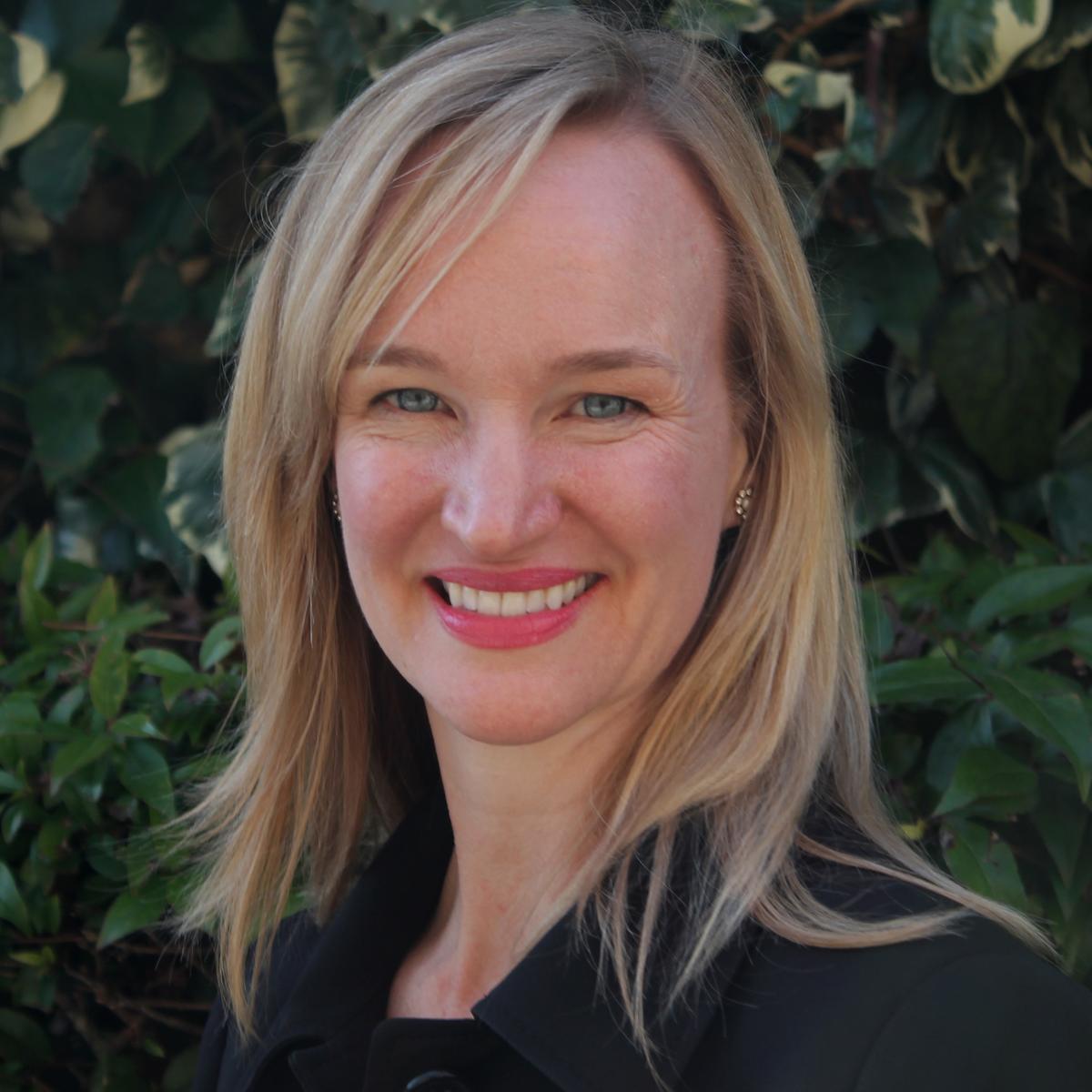
Alexa Koenig, PhD, JD, is Co-Faculty Director of the Human Rights Center (winner of the 2015 MacArthur Award for Creative and Effective Institutions), Director of HRC’s Investigations Program, and an adjunct professor at UC Berkeley School of Law, where she teaches classes that focus on the intersection of emerging technologies and human rights. She also co-teaches a class on open source investigative reporting at Berkeley Journalism. Alexa co-founded the Human Rights Center Investigations Lab(link is external), which trains students and professionals to use social media and other digital open source content to strengthen human rights research, reporting, and accountability. Alexa is a member of the American Association for the Advancement of Science’s Committee on Scientific Freedom and Responsibility, a member of the Technology Advisory Board for the Innovation Lab at Human Rights First, an advisory board member of Physicians for Human Rights, and a co-founder of the University of California Network on Human Rights Fact-Finding. She previously helped establish and co-chaired the Technology Advisory Board of the Office of the Prosecutor at the International Criminal Court; co-chaired the International Bar Association’s Human Rights Law Committee; and was a member of the University of California’s Presidential Working Group on Artificial Intelligence, for which she co-chaired the Human Resources subcommittee. Alexa has been honored with several awards for her work, including the United Nations Association-SF’s Global Human Rights Award, UC Berkeley’s Mark Bingham Award for Excellence, and the Eleanor Swift Award for Public Service. She has also been honored with a residency at the Rockefeller Foundation’s Bellagio Center (2019), with multiple writing residencies at Mesa Refuge, as a Woman Inspiring Change by Harvard’s Women’s Law Association (2020), and as one of “100 Brilliant Women in AI Ethics” by Women in AI Ethics (2022). She conceived of and directed development of the Berkeley Protocol on Digital Open Source Investigations and has conducted trainings on online open source investigations at organizations around the world. Alexa has a BA from UCLA in World Arts and Cultures summa cum laude, a JD from the University of San Francisco with a specialization in cyberlaw and intellectual property magna cum laude, and both an MA and a PhD from UC Berkeley’s Jurisprudence and Social Policy Program with honors.
ALEXA KOENIG’S RECENT BOOKS INCLUDE
- Graphic: Trauma and Meaning in our Online Lives,(link is external) co-author with Andrea Lampros (Cambridge University Press 2023)
- Digital Witness: Using Open Source Methods for Human Rights Investigations, Advocacy and Accountability, with Sam Dubberley and Daragh Murray (Oxford University Press, 2019)
-
Hiding in Plain Sight: The Pursuit of War Criminals from Nuremberg to the War on Terror, with Eric Stover and Victor Peskin (UC Press, 2016)
-
Extreme Punishment: Comparative Studies in Detention, Incarceration and Solitary Confinement, editor with Keramet Reiter (Palgrave MacMillan, 2015)
-
The Guantánamo Effect: Exposing the Consequences of U.S. Detention and Interrogation Practices, contributor with Eric Stover, Laurel Fletcher, and Stephen Smith Cody (UC Press, 2009). Additional research and commentary have appeared in such diverse outlets as the Annual Review of Law and Social Science, the International Encyclopedia of the Social and Behavioral Sciences, Foreign Policy, Foreign Affairs, US News and World Reports, and elsewhere.
RECENT MEDIA APPEARANCES
- Bellingcat: The online investigators tracking alleged Russian war crimes in Ukraine(link is external), 60 Minutes, May 2022. Discussed the use of OSINT tools by civilian investigators, the important standards set by the Berkeley Protocol, and the utility of OSINT in war crimes investigations in Ukraine and beyon
- Berkeley students investigate war crimes using social media, UC Berkeley News
- Digital Detectives, explores how open source investigations have sparked a revolution in journalism; NHK World, April 2020
- Fake news v fact: The battle for truth, The Economist, February 2019
- PBS NewsHour(link is external), discussing the launch of the Human Rights Investigations Lab, February 2017
- “Hiding in Plain Sight: The Pursuit of War Criminals from Nuremberg to the War on Terror,” ALOUD Podcast Series, Jan. 17, 2017
- UC Berkeley students work to authenticate photos, videos from conflict zones, ABC 7 News, July 13, 2017.
Education
J.D., University of San Francisco School of Law
Ph.D., UC Berkeley
M.A., UC Berkeley
Alexa Koenig is not teaching any Law courses in Spring 2025.
Courses During Other Semesters
| Semester | Course Num | Course Title |  Teaching Evaluations Teaching Evaluations | Fall 2024 | 224 sec. 001 | Conducting Open Source Investigations | View Teaching Evaluation | 262.68 sec. 001 | Human Rights and War Crimes Investigations | View Teaching Evaluation | Spring 2024 | 224 sec. 001 | Conducting Open Source Investigations | View Teaching Evaluation | 262.65 sec. 001 | Human Rights and Social Justice Writing Workshop | View Teaching Evaluation |
|---|

The online investigators tracking alleged Russian war crimes in Ukraine
Alexa Koenig, Executive Director of the Human Rights Center, appears on 60 Minutes to discuss open source investigations and says we are headed into an entirely new era of human rights investigations, and war crimes investigations, more generally

Four House committee chairs ask Big Tech to archive evidence of war crimes in Ukraine
Four high-ranking congressional Democrats sent formal requests to the CEOs of YouTube, TikTok, Twitter and Facebook’s parent company, Meta, on Thursday, asking them to archive content that could be used as evidence of Russian war crimes in Ukraine and citing a 2021 report from the Human Rights Center

Detailed ‘open source’ news investigations are catching on
Alexa Koenig, Executive Director of the Human Rights Center, discusses the increase in news using open source investigation techniques
Watching from space, satellites collect evidence of war crimes
Alexa Koenig, Executive Director of the Human Rights Center, discusses the use of satellite imagery to capture war crimes evidence

‘You’re not going to get away with it’: Ukraine unveils first war crimes charges amid 8,000 investigations
Alexa Koenig, Executive Director of the Human Rights Center, says it could take years to wade through all the war crimes evidence in Ukraine, it’s critically important to process it as soon as possible, to point investigators to the most important cases – and those that could lead to speedy prosecutions

Can technology bring Vladimir Putin to justice?
Alexa Koenig, Executive Director of the Human Rights Center, says that the challenge on convicting war crimes through social media images will be on the admissibility, on convincing judges this is something they should be allowing or heavily weighing

The Lawfare Podcast: Bringing Evidence of War Crimes From Twitter to the Hague
Alexa Koenig, Executive Director of the Human Rights Center, appears on the Lawfare Podcast for an in-depth interview examining the history of using social media for international criminal cases and Berkeley/the HRC’s role in developing the Berkeley Protocol

Could social media hold evidence of alleged Russian war crimes?
Alexa Koenig, Executive Director of the Human Rights Center, explains the benefits and challenges of a large amount of social media evidence

From war crime to conviction — what it will take to bring the Bucha killers to justice
Alexa Koenig, Executive Director of the Human Rights Center, discusses the increase in major warrants of arrest coming forward on the basis open source investigations and social media evidence

War Crimes Tribunals in the Digital Age
Alexa Koenig, Executive Director of the Human Rights Center, discusses the Berkeley Protocol on Digital Open Source Investigations and the long collaborative process of formalizing OSINT to be admissible in international courts.

Digital detectives scour Ukraine social media for evidence of Russian war crimes
Alexa Koenig, Executive Director of the Human Rights Center, weighs in on the big role social media platforms have to play as activists, journalists, researchers and volunteers race to dig up damning photos and videos of Russia’s conduct in Ukraine

New Project Tracking Campaign to Curtail Reproductive Rights Showcases Cross-Campus Alliance
A new radio show about Texas’ abortion law strengthens the ties between the Human Rights Center and the UC Berkeley Graduate School of Journalism.
A Strike at the Heart of Roe
Research and reporting from an innovative collaboration between the Human Rights Center at Berkeley Law and the Investigative Reporting Program at Berkeley Journalism resulted in this podcast from Reveal exploring how Texas has gone after Roe v. Wade
The Media Show
Alexa Koenig, Executive Director of the Human Rights Center, talks to BBC Radio about open-source investigators’ work to find the truth behind news events

Taliban Gunshots Echo Through Scholar Khwaga Ghani’s Unexpected New Life at Berkeley
Journalist Khwaga Ghani is the first fellow in an ambitious program to support Afghan refugees, co-sponsored by Berkeley Law’s Human Rights Center.

Q&A on Court Ordering Facebook to Disclose Content on Myanmar Genocide
Alexa Koenig, Executive Director of the Human Rights Center, discusses a United States Magistrate judge’s decision ordering Facebook to disclose content in order to assess “responsibility for genocide” against the Rohingya before the International Court of Justice

Berkeley Law Center Helps Launch First Investigative Reporting Class Using Open Source Intelligence
The Human Rights Center at Berkeley Law and the Investigative Reporting Program at Berkeley Journalism have launched the country’s first investigative reporting course using open source intelligence (OSINT) at a university.

Myanmar military killing protestors, civilians as ‘psychological warfare’ after coup
Alexa Koenig, Executive Director of the Human Rights Center, appears on PBS NewsHour to discuss Myanmar’s military use of killings to terrorize the country, which was the focus of an open source investigation from the Human Rights Center and the Associated Press
Myanmar’s junta using bodies to terrorize
An investigation by the Associated Press and the Human Rights Center finds that Myanmar’s junta is hiding, mutilating and cremating bodies to terrorize its citizens since the military takeover

Law professors sue in S.F. to lift Trump sanctions on international court prosecutors
Legal advisers to the International Criminal Court, including Alexa Koenig, director of the Human Rights Clinic, have sued to challenge the Trump administration’s sanctions on the court’s prosecutors for investigating Israel and U.S. actions in Afghanistan — sanctions that the Biden administration has left intact so far