Skip to content Skip to main menu
  • News
  • Events
  • Law Library
  • Giving
  • Alumni
  • Quicklinks

    • Academic Calendar
    • bCourses Overview
    • bCourses Link
    • Schedule of Classes
    • Academic Rules
    • View Evaluations
    • UC Berkeley Law Logo (Identity)
    • RoloLaw
    • Event, Catering and Food Policy
    • Emergency Info
    • Resource Hub for Faculty & Staff
    • COVID-19 Information

    Support

    • Remote Teaching Resources
    • Accessibility in Teaching & Learning
    • Computing Support
    • Faculty Support Unit
    • Berkeley Law Events
    • Business Services
    • Faculty Services (Library)
    • Human Resources & Academic Personnel
    • Instructional Technology
    • Phones
    • Room Reservations
    • Building Services
    • Resources to Respond to Sexual Harassment
  • Quicklinks

    • Academic Calendar
    • Berkeley Law Facebook
    • J.D. Financial Aid
    • Faculty Profiles
    • Schedule of Classes
    • Teaching Evaluations
    • Final Exam Review Session Schedule
    • Exams
    • Final Exam Schedule
    • CalCentral
    • COVID-19 Information
    • Event, Catering and Food Policy
    • Emergency Info
    • Resource Hub for Students

    For Students

    • Dean of Students Office
    • Academic Policies
    • Academic Skills Program
    • Student Organizations
    • Student Journals
    • Commencement
    • Bookstore
    • Wellness at Berkeley Law
    • Registrar
    • University Health Services
    • Resources to Respond to Sexual Harassment
    • Inclusive Restrooms
  • Search for People at Berkeley Law

UC Berkeley Law
    • Academics Home
    • Areas of Study
      • Criminal Justice
      • Environment and Energy
      • Social Justice and Public Interest
        • Curriculum
          • J.D. Path
          • LL.M. Path
        • Social Justice+Public Interest Community at Berkeley Law
          • Public Interest and Pro Bono Graduation
      • Business and Start-ups
        • Business Law Curriculum
        • Business Law Faculty
      • Law and Technology
        • Student Activities
        • Law and Tech Curriculum
        • Law and Tech Faculty
      • Environmental Law
      • International and Comparative Law
        • Centers, Clinics, and Programs
        • Faculty
        • Student Activities
      • Constitutional and Regulatory
      • Law and Economics
        • Faculty
        • Prospective Students
        • Visiting Scholars
        • Law and Economics Fellowship
    • J.D. Program
      • First-Year Curriculum
      • Concurrent Degree Programs
      • Combined Degree Programs
      • Berkeley-Harvard Degree Programs
    • LL.M. Programs
      • Current Academic Calendars
      • LL.M. Executive Track
        • Past LL.M. Executive Track Academic Calendars
          • 2023 LL.M. Executive Track Academic Calendar
          • 2022 LL.M. Executive Track Academic Calendar
          • 2021 LL.M. Executive Track Academic Calendar
          • 2020 LL.M. Executive Track Academic Calendar
          • 2019 LL.M. Executive Track Academic Calendar
          • 2018 LL.M. Executive Track Academic Calendar
        • LL.M. Executive Track Courses
      • LL.M. Traditional Track
        • Current Academic Calendars
      • LL.M. Courses
      • Certificates of Specialization
      • Application & Admission
        • Steps to Apply
        • Application Forms & Deadlines
        • Eligibility & Admission Standards
        • Application Checklist
        • Admissions Policies
        • Check Application Status
      • Tuition & Financial Aid
      • Admitted Students
        • Visas
        • Housing Resources
        • Cancellation & Refund Policies
      • Join an Event & Connect with LL.M. Staff
        • Recruiting and Informational Events
        • Visit Us!
        • Contact Us
      • Meet Our Students
        • LL.M. Thesis Track Student Profiles
      • Meet Our Partners
      • Questions? Start Here
    • Doctoral Programs
      • J.S.D. Program
        • Application & Admission
          • Steps to Apply
          • Application Form & Deadline
          • J.S.D. Tuition and Financial Aid
          • Eligibility & Admission Standards
          • Application Checklist
          • Check Application Status
        • J.S.D. Student Profiles
        • Contact Us
      • Ph.D. Program – Jurisprudence and Social Policy (JSP)
        • JSP Student Awards cont.
        • JSP Student Placements cont.
        • Events Calendar »
    • Certificates & Honors
    • Executive Education
    • Schedule of Classes
      • One Year Curriculum Planner
    • Current Academic Calendars
      • 2025-2026 Academic Calendar
      • 2025 LL.M. Executive Track Calendar
      • Past Academic Calendars
        • 2024-2025 Academic Calendar
        • 2023-2024 Academic Calendar
        • 2022-2023 Academic Calendar
        • 2021-2022 Academic Calendar
        • 2020-2021 Academic Calendar
        • 2019-2020 Academic Calendar
        • 2018-2019 Academic Calendar
        • 2017-2018 Academic Calendar
        • 2016-2017 Academic Calendar
        • 2015-2016 Academic Calendar
        • 2014-2015 Academic Calendar
        • 2013-2014 Academic Calendar
        • 2012-2013 Academic Calendar
        • 2011-2012 Academic Calendar
        • 2010-2011 Academic Calendar
        • 2009-2010 Academic Calendar
        • 2008-2009 Academic Calendar
      • Future Academic Calendars
        • 2026 LL.M. Executive Track Calendar
        • 2026-2027 Academic Calendar
    • Registrar
      • Order of the Coif and Dean’s List
      • Academic Rules
        • Supplemental Academic Rules for Traditional Track LL.M. Students
        • Academic Honor Code
        • Academic Rules Petition
        • Academic Rule 3.06 – applies to the Class of 2010 and before
        • Credit Hours
      • Registration
      • Transcripts
      • Verification of Attendance
      • Registrar’s Forms
      • Ordering a Diploma »
      • J.D. Academic Guidance
        • 3L Requirements FAQ
        • 3L Degree Worksheet
      • Registrar’s Student FAQ
      • Bar Information
        • State Bar Swearing-In Ceremony Information
          • State Bar Swearing-In Ceremony – Who’s Coming
    • Admissions & Financial Aid Home
    • J.D. Admissions
      • Applying for the J.D. Degree
        • Ready to Apply
        • After You’ve Applied
        • Transfer & Visiting Student Applicants
        • Pre-Law Preparatory Academy
        • FAQs
      • Entering Class Profile
      • Connect with Admissions
        • Plan Your Visit
        • Virtual Engagement
        • Recruitment Events
        • Law Building Tour
        • J.D. Viewbook
        • Contact LL.M. Admissions
        • Contact J.S.P. Admissions
      • Meet Our Students
      • Studying at Berkeley Law
      • Living in the Bay Area
      • Concurrent & Combined Degree Programs
      • Faculty Admissions Policy
      • Outreach Partnerships
      • Admitted Students – First-Year »
      • Admitted Students – Transfer & Visitor Status »
      • For Current Berkeley Law Students
      • Admissions Policies
      • ABA Required Disclosures »
    • LL.M. Admissions
    • J.S.D. Admissions
    • Ph.D. (JSP) Admissions
    • Visiting Scholar and Visiting Student Researcher Admissions
    • Financial Aid
      • J.D. Financial Aid
        • Prospective and Entering Students
          • Entering Student Scholarships
          • Entering Student Gift Aid FAQ
        • J.D. Cost of Attendance
        • J.D. Scholarships
          • Need-Based Aid Appeal
          • External Scholarships
          • Berkeley Law Opportunity Scholarship
          • Public Interest Scholars
          • Leadership Academy
          • Native American Opportunity Plan
          • PDST-Increase Offset Awards (PIOAs)
        • Loan Repayment Assistance Program (LRAP)
          • LRAP Eligibility Guidelines
          • LRAP Eligibility Calculator
          • How to Apply for LRAP
          • LRAP Forms
          • Public Service Loan Forgiveness (PSLF)
          • News & Updates
          • LRAP & PSLF Testimonials
          • LRAP FAQs
        • J.D. Concurrent and Combined Degree Programs
      • LL.M. Tuition & Financial Aid
        • LL.M. Tuition & Fees
        • Financial Aid Timeline for LL.M. and J.S.D. Students
        • LL.M. Scholarships
        • International Funding Sources
      • J.S.P. Financial Aid
        • J.S.P. Cost of Attendance
        • JSP Fellowships and Other Financial Support
      • J.S.D. Tuition & Financial Aid
        • J.S.D. and J.S.P. Cost of Attendance for JSD
        • J.S.D. Robbins Fellowship
        • Financial Aid Checklist for J.S.D. Students
        • International Funding Sources
      • Financial Aid FAQ & Glossary
      • Financial Aid Forms
      • Info Sessions & Presentations
      • Financial Literacy
      • Requesting a Financial Aid Award for a Student (for faculty and staff)
      • About Our Team
      • Other Financial Aid Resources
        • Financial Aid for Active Military and Veteran Students
        • Financial Aid Information for International Students
        • Financial Aid for Undocumented Students
        • Resources For Bar-Related Expenses
        • Satisfactory Academic Progress
        • Withdrawals and Financial Aid
      • Student Loans
      • Federal Work-Study Program
    • Faculty & Research Home
    • Faculty Experts by Topic
    • Faculty Profiles
    • Deans Emeritus Lecturers
    • Recent Faculty Scholarship
    • Awards and Honors
    • Faculty on Social Media
    • Faculty in the News
    • Featured Research
    • Centers, Institutes & Initiatives
    • Experiential Home
    • Clinical Program
      • Apply to the Clinics
      • Death Penalty Clinic
        • About the Clinic
          • Faculty and Staff
          • Alumni
        • Clinic News
        • Projects and Cases
          • Death Penalty Clinic Amicus Curiae Briefs
          • Guess Who’s Coming to Jury Duty?: How the Failure to Collect Juror Demographic Data Contributes to Whitewashing the Jury Box
          • Whitewashing the Jury Box: How California Perpetuates the Discriminatory Exclusion of Black and Latinx Jurors
        • Information for Students
        • Resources and Publications
          • Capital Defense Internships and Jobs
        • Donate to the Clinic
      • East Bay Community Law Center
      • Environmental Law Clinic
        • About the Clinic
        • Information for Students
        • Newsletters
        • Clinic News
        • Student Voices
        • Faculty and Staff
        • Alumni
        • Donate to the Clinic
        • Lawsuit Filed Over Radioactive Waste at Hunters Point Naval Shipyard
      • Global Rights Innovation Lab Clinic
        • About Us
        • Information for Students
        • Our Work
      • Human Rights Clinic
        • About the Clinic
          • Alumni
          • Faculty and Staff
        • Clinic News
        • Projects and Cases
          • Featured Reports and Projects
          • Accountability and Transitional Justice
          • Promoting Human Rights in the United States
          • A Rights-Based Approach to Combating Poverty: Economic, Social & Cultural Rights
          • Counter-Terrorism and Human Rights
        • Resources and Publications by Focal Area
        • Information for Students
          • Student Self-Reflection
        • Donate to the Clinic
      • Policy Advocacy Clinic
        • About Us
        • People
          • Georgia Valentine
        • Clinic News
        • Resources and Publications
        • Juvenile Fees
          • COVID-19 Action on Juvenile Fees
          • Juvenile Fee Abolition in California
        • Adult Fees
          • Ending Unjust and Ineffective Criminal Fees in California
        • Students
        • Donate to the Clinic
      • Samuelson Law, Technology & Public Policy Clinic
        • About
          • Faculty and Staff
          • Clinic Alumni
          • Partners
        • Clinic News
        • Our Work
        • Information for Students
        • Access Reports
      • Social Enterprise Clinic
        • About Us
        • Information for Students
        • Our Work
        • Clinic News
      • Clinical Program Annual Report
        • Annual Report Archive
      • The Brian M. Sax Prize for Excellence in Clinical Advocacy
        • Brian M. Sax
        • Recipients
    • Pro Bono Program
      • The Pro Bono Pledge
        • Definition of Pro Bono
      • Log Your Pro Bono Hours
        • Definition of Pro Bono
      • Student-Initiated Legal Services Projects (SLPS)
        • How to Apply
        • Current Student-Initiated Legal Services Projects
          • Animal Law and Advocacy
          • Arts and Innovation Representation
          • Berkeley Immigration Group
          • Berkeley Law Anti-Trafficking Project
          • Berkeley Law and Organizing Collective
          • Berkeley Name, Image, and Likeness Initiative (BNILI)
          • Business Community Legal Advice Workshop
          • California Asylum Representation Clinic
          • Clean Energy Leaders In Law
          • Climate Migration & Displacement Project
          • Consumer Protection Public Policy Order
          • Contra Costa Reentry Project
          • Digital Rights Project
          • Disability Rights Project
          • Drug Policy Project
          • East Bay Dreamers Project
          • Environmental Conservation Outreach
          • Family Defense Project
          • Food Justice Project
          • Foster Education Project
          • Freedom of Information Advocates
          • Gun Violence Prevention Project
          • Homelessness Service Project
          • International Human Rights Workshop
          • International Refugee Assistance Project
          • La Alianza Workers’ and Tenants’ Rights Clinic
          • Legal Obstacles Veterans Encounter
          • Name and Gender Change Workshop
          • Native American Legal Assistance Project
          • Palestine Advocacy Legal Assistance Project
          • Police Review Project
          • Political and Election Empowerment Project
          • Post-Conviction Advocacy Project
          • Queer Justice Project
          • Reentry Advocacy Project
          • Reproductive Justice Project
          • Startup Law Initiative
          • Survivor Advocacy Project
          • Tenants’ Rights Workshop
          • Workers’ Rights Clinic
          • Youth Advocacy Project
        • How to Start a New SLP
        • Inactive Student-Initiated Legal Services Projects
          • AI Legal Workshop
          • Berkeley Abolitionist Lawyering Project
          • Berkeley Immigration Law Clinic
          • Berkeley Students in Support of Arts and Innovation
          • Civil Rights Outreach Project (CROP)
          • Community Restorative Justice Project
          • Community Defense Project
          • Free The Land Project
          • Juvenile Hall Outreach
          • Karuk-Berkeley Collaborative Legal
          • Legal Automation Workshop
          • Local Economies and Entrepreneurship Project
          • Prisoner Advocacy Network
          • Wage Justice Clinic
          • Workers’ Rights Disability Law Clinic
      • Berkeley Law Alternative Service Trips (BLAST)
        • Current Berkeley Law Alternative Service Trips (BLAST)
          • Alaska
          • Atlanta
          • Central Valley
          • Florida
          • Hawai’i
          • Kentucky
          • U.S./Mexico Border
        • Inactive Berkeley Law Alternative Service Trips
          • Los Angeles
          • Montana
          • Mississippi
          • South Texas
          • Tijuana
      • Call for Necessary Engagement in Community & Timely Response (CNECT)
        • Berkeley Law Afghanistan Project
        • Current & Past CNECT Partners
          • Hub for Equity in Administrative Representation
          • Racial Justice Legal Research Bank Project
        • CNECT News
      • Independent Projects
      • Opportunities for LL.M. Students
      • Supervising Attorneys
      • Pro Bono Spotlights
        • Linda Gordon ’24
        • BNILI Project
        • FOIA Project
        • IRAP Project
        • David Nahmias ’18
        • Angélica César ’25 & Mackenzie Gettel ’25
        • Skylar Cushing ’26
        • Addie Gilson ’25 & Eli McClintock-Shapiro ’26
        • Tori Porell ’18
        • Drug Policy, Education, and Decriminalization (DECrim) Project
        • Caity Lynch ’25
        • Berkeley Immigration Group SLP Supervising Attorneys
        • Family Defense Project
        • Gabby Cirelli ’24
        • Brooke D’Amore Bradley ’23
        • Taiya Tkachuk ’24
        • Emily Chuah ’24
        • Malak Afaneh ’24
        • KeAndra Hollis ’24
        • Maripau Paz ’24
        • Lucero Cordova ’23
        • Bharti Tyagi ’21
        • Benji Martinez ’23
        • Will Morrow ’23
        • Stephanie Clemente ’23
        • Francesco Arreaga ’21
        • Armbien Sabillo ’21
        • Kelsey Peden ’21
        • Jennifer Sherman ‘22
        • Professor Khiara M. Bridges
        • Professor Kristen Holmquist
      • Awards
      • Law Firm Pro Bono Programs
      • New York Bar Pro Bono Requirement
      • For Public Interest & Pro Bono Providers
    • Professional Skills Program
      • Legal Research, Analysis, and Writing Program
      • Elective Skills Courses
    • Advocacy Competitions Program
      • Eligibility by Class Year
      • Internal Competitions
        • Prozan Motion Practice Intensive
        • McBaine Honors Moot Court
          • 2026 McBaine Competition
          • McBaine Honors Moot Court Competition 2024 Photo Essay
          • Previous Years’ McBaine Competitions
          • Past McBaine Winners
          • McBaine — Frequently Asked Questions
          • Helpful Materials
        • Halloum Negotiation Competition (Spring)
          • Competition FAQ
          • Previous Winners
        • Halloum Business Competition (Fall)
        • Bales Trial Competition
      • External Competitions (BOA)
        • BOA Tryouts
        • Alternative Dispute Resolution (ADR) Team
        • Moot Court Team
        • Tech & IP Team
        • Trial Team
      • Competition Videos
    • Field Placement Program
      • Testimonials
      • How to Apply
      • Judicial Externships
      • Civil Field Placements
      • Criminal Field Placements
      • Away Field Placements
        • The Hague
        • INHR Program
        • UCDC Law Program
      • For Supervisors and Host Organizations
        • BACE: Bay Area Consortium on Externships
      • Administrative Rules
      • Frequently Asked Questions
      • Field Placement Program Evaluation Database
    • Startup@BerkeleyLaw
      • Law Students
      • Entrepreneurs
        • How to Start a Startup @ Cal
        • FORM+FUND
        • Startup Law Initiative
      • Investors
    • Veterans Law Practicum
    • Ninth Circuit Practicum
    • Domestic Violence & Gender-Based Violence Practicum
      • About the Director
      • How to Apply
      • History & Impact
    • Careers Home
    • About CDO
    • For J.D. Students
      • CDO Email Archive
      • JD Appointments and Drop-In Hours
      • Private Sector Careers
        • Explore Private Sector Careers
        • How to Apply to Private Sector Jobs
          • 2L Summer Private Sector Job Search
          • OCI Alternatives
      • Public Interest Careers
        • Explore Public Interest
          • Public Interest/Public Sector Employer Events & Resources
        • Find Public Interest Jobs
          • PI/PS Interviewing Resources
          • Using Interview Programs to Land Your 1L Summer Job
          • Your 2L and 3L PIPS Job Search
          • Post-Graduate Public Interest Fellowships
          • PI/PS Job Search Videos
        • Finance Your Public Interest Career
          • Summer Funding for PI/PS Internships & Judicial Externships
          • Berkeley Law Public Interest and Bridge Fellowships
      • Public Sector Careers
        • Federal Government Careers
        • State & Local Government Careers (incl. CA)
        • Careers in Policy/Politics
      • Judicial Clerkships
        • Application Instructions & Resources
        • Alumni Clerkship & Judicial Staff Directory
        • Clerkship Yearbooks
        • Clerkship and Interview Evaluations
        • Videos of Clerkship Programs
        • For Clerks
      • Judicial Externships
      • OCI Programs
      • Alternative Careers
    • For LL.M. Students
    • For Employers
      • UC Berkeley Law Recruiting Policies
      • Non Discrimination and Non Harassment Policies
      • Grading Policy
      • Posting Job Listings
      • OCI Programs
      • Reaching Berkeley Law J.D. Students
      • Employer Resources for Virtual Internship Programs
    • For Alumni
      • For Recent Graduate Job-Seekers
      • Enrichment Opportunities for Recent Grads
      • Executive Education
      • CDO Online Resources
    • Careers in Law Teaching
      • Alumni Faculty Directory
      • Videos of Academic Placement Committee Programs
    • Career Resource Library
    • Employment Outcomes
      • Employment Statistics
      • Judicial Clerkship Placement Statistics
    • 12twenty for Students & Alumni
  1. Home
  2. Articles
  3. News
  4. Innovation Influence: Tejas N. Narechania Makes the Connection Between Research, Policy, and Teaching

Innovation Influence: Tejas N. Narechania Makes the Connection Between Research, Policy, and Teaching

Tejas Narechania teaching in front of whiteboard
Berkeley Law Professor Tejas N. Narechania teaching this fall’s Regulated Digital Industries: Telecommunications Law & Policy for a Modern Era course, which he says helps keep him at the forefront of the fast-moving tech law sector. Photos by Brittany Hosea-Small
  • Share article on Facebook
  • Share article on Twitter
  • Share article on Bluesky
  • Share article on LinkedIn
  • Email article

By Gwyneth K. Shaw

As a scholar focused on the intersection of law and technology, Berkeley Law Professor Tejas N. Narechania has had a front-row seat to profound shifts fostered by Silicon Valley’s innovations.

“The technologies have changed dramatically: One day we’re talking about internet access and network neutrality. Then the next day we’re talking about NFTs,” he says. “And now we’re talking about AI.”

But as each hot new idea or gadget has grabbed funders and headlines — from broadband to bored apes to ChatGPT — Narechania has kept his eye on the big-picture questions. Those, he says, have remained fairly steady.

“How do we balance incentives and structures that give rise to new innovation with our desire to make sure that these new technologies are available to — and work for the benefit of — everyone?” he asks. “That’s still the question, no matter whether we’re talking about patents and copyrights, broadband policy, or AI.”

And Narechania, a faculty co-director of the law school’s Berkeley Center for Law & Technology (BCLT), has stayed at the forefront with up-to-the-minute research and teaching. Two of his most recent works highlight that reach, offering up a prescription for restoring the promise of the early internet and a framework for regulating AI using longstanding antitrust laws. 

“I think innovation is incredibly important. It’s why I love technology law and policy,” he says. “It is important, I think, to be mindful of how innovation can work with the other values prized by our society and our legal systems, and how innovation might work against them. 

“That is, innovation can thrive in a market that is shaped to protect other values too.”

Enhancing the ‘Enhanced Internet’

In “How to Save the Internet,” which will be published soon in the Berkeley Technology Law Journal, Narechania and his co-author, UC Berkeley Electrical Engineering and Computer Science Professor Emeritus Scott Shenker, argue that the internet’s evolution has effectively allowed the current system to escape its initial regulatory bounds. 

These behind-the-scenes upgrades — as internet-based applications rose to prominence, increasing demands for new functionality and better security — gave us streaming video on demand but also caused a drift away from early principles of interconnectedness, generality, and  neutrality in the name of an “Enhanced Internet.” Without a new effort to bring the internet back into line, they argue, big industry players could stifle the next wave of innovation and hurt consumers. 

Tejas Narechania teaching
“Teaching this class is great discipline,” Narechania says about his Regulated Digital Industries course.

“That original internet was not designed to meet the security demands of our modern commercial internet. And it was not designed for the volume of speed-sensitive applications we use — things like video streaming services,” Narechania says. “So large, private companies built new infrastructure on top of the internet to deliver faster, safer online experiences. But as that infrastructure replaces the open, interconnected networks that made up the original internet, it threatens to kill off what made the original internet wonderful: its innovative and democratizing spirit.” 

Narechania and Shenker propose a revitalized set of technical standards, which they call the “InterEdge,” already in the process of being built by researchers and developers. And they urge a shift to requiring interconnection among carriers — a critical component of, for example, telephone service regulation that failed to carry over to internet service providers — as well as a codification of the principle of net neutrality, so no provider can refuse to transmit content to gain a competitive advantage. 

Finally, they emphasize ensuring that the generality of the internet be preserved, making it useful to the constantly evolving network of users, applications, and content without requiring major changes. 

Interconnected providers would turn the “Enhanced Internet 2.0” into essentially a unified public infrastructure, aiding consumers, Narechania and Shenker argue. This proposal would also improve the internet’s resilience, bolster competition, and help close the so-called “digital divide” while continuing to foster innovation, they conclude. 

“Our choice is stark. We can continue along the current path, allowing the internet to become a fragmented and concentrated system that privileges incumbents and stifles innovation,” Narechania and Shenker write. “Or we can chart a new course — one that preserves the performance benefits of the Enhanced Internet while safeguarding the principles that made the internet revolutionary in the first place.”

Putting the antitrust in AI

Another recent paper, “An Antimonopoly Approach to Governing Artificial Intelligence,” was published in the Yale Law & Policy Review in fall 2024. In that article, Narechania and Vanderbilt Law School Professor Ganesh Sitaraman show that AI’s industrial organization, rooted in AI’s technological structure, “evinces market concentration at and across a number of layers.” 

Important elements of AI infrastructure, they argue, are robust enough to warrant regulation, and applying an antimonopoly lens would offer consumers technical safeguards as well as enhanced competition. 

“I think we have to start with the premise: Using antimonopoly tools presupposes some degree of market concentration. So is there market concentration in AI? I think the answer is clearly yes,” Narechania says. “Sure, there are lots and lots of companies building new AI tools and applications. But if we peek below that surface, we see that all those applications are built on a handful of models; those models rely on a concentrated set of cloud computing infrastructure providers; and those cloud systems are built using microprocessing hardware that emerges out of a very narrow supply chain.”
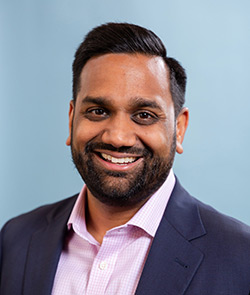
Tejas Narechania
Professor Tejas N. Narechania

The risks of that concentration, he adds, include traditional monopoly concerns about prices and quality, as well as worries that monopolists will be content to make only marginal improvements — and be quick to choke off new innovations that could supplant their dominance while favoring affiliated applications. OpenAI, for example, might favor a legal research-and-writing application that it has a close relationship with while offering worse pricing terms to a competing legal application, Narechania explains.

“So that’s where antimonopoly tools come in,” he says. “In other contexts, we’ve developed a range of tools, such as tariffed pricing or nondiscrimination rules, to address, ex ante, the risks of concentration. We should do the same in AI, especially because concentration in AI seems to be structural.”

A previous paper, “Machine Learning as Natural Monopoly,” mentioned some of these concerns, Narechania says, and researchers at RAND and the Brookings Institution have reached similar conclusions. 

“These risks are somewhat more hidden than, say, the risks of deepfakes, or of the use of biased models in, say, law enforcement contexts,” he says. “Those risks have rightfully received a lot of attention. But we should pay attention to risks of industry concentration, too. That is, it’s not an either/or scenario; it’s a both/and one.”

From the White House to the classroom

Narechania, who worked at Microsoft before getting a J.D. from Columbia Law School, has seen the rulemaking process up close across multiple dimensions. He served as a special counsel at the Federal Communications Commission, focusing on net neutrality issues, and clerked for both U.S. Seventh Circuit Court of Appeals Judge Diane Wood and U.S. Supreme Court Justice Stephen Breyer — both are now retired — before joining the Berkeley Law faculty in 2016. 

In recent years, he advised the Biden administration on questions of competition and AI and became the co-leader of the Artificial Intelligence, Platforms, and Society Project, a collaboration between BCLT and the CITRIS Policy Lab at the Center for Information Technology Research in the Interest of Society and the Banatao Institute, which draws from expertise on the UC campuses at Berkeley, Davis, Merced, and Santa Cruz. 

Since President Donald Trump took office in January, Naerchania says the administration has embraced the mindset of many tech moguls to “move fast and break things.”

“But I think we have to be sensitive to the fact that some things are really valuable, and really difficult to put back together once broken,” he says. “Some state regulation, for example, is aimed at making sure we protect some core, foundational values, such as protecting against — and limiting the perpetuation of — discrimination in our legal systems. I think those values are paramount and should not be sacrificed at the altar of innovation. The Trump White House seems to prefer preempting such state regulation in order to create what it says is an environment more conducive to innovation.”

Already, some states, including California, are at odds with the administration on certain policy issues. For example, while the White House is pushing Congress to embrace a ban on state regulations of AI, Gov. Gavin Newsom recently signed legislation aimed at reining in some AI technologies. 

As the landscape continues to change, Narechania is one of Berkeley Law’s many professors helping students understand the frontiers of technology law and training them to be tomorrow’s leaders in the sector. His Regulated Digital Industries: Telecommunications Law & Policy for a Modern Era course looks at the broad arc of the telecom industry — from concerns about who moderates content to the big question of whether China can operate TikTok in the U.S. — using a unique blend of features of administrative law, antitrust law, and constitutional law as a foundation. 

“I love teaching this class,” Narechania says. “Every time I teach it, I always have at least one moment where a student says something so brilliant and insightful that it changes my thinking about a specific policy problem or solution.” 

Just this fall, he says, a student comment about his work in progress on network neutrality made him go back and rethink an aspect of his argument. The course has been a great way for him to stay connected to his research while sharing his knowledge with students. 

“The students also always hunger to learn about the newest, latest technologies: AI, 5G, and more,” Narechania says. “So teaching this class is great discipline: I can’t get lazy, and I have to make sure I’m staying on top of the latest technologies, and thinking through the legal and policy dimensions of their development.”

12/04/2025
Topics: Artificial Intelligence, Constitutional and Regulatory, Faculty News, Public Mission, Social Justice and Public Interest, Technology, Intellectual Property and Privacy

News

  • Transcript Magazine
    • Transcript Archive
      • Transcript Spring 2021 Online Edition
      • Transcript Fall 2020 Online Edition
      • Transcript Spring 2020 Online Edition
      • Transcript Fall 2019 Online Edition
      • Transcript Spring 2019 Online Edition
      • Transcript Fall 2018 Online Edition
      • Transcript Spring 2018 Online Edition
      • Transcript 2017 Online Edition
      • Transcript 2016 Online Edition
  • Podcasts
  • On Display
  • Media Highlights
  • News Archive
    • 2025 Archive
    • 2024 Archive
    • 2023 Archive
    • 2022 Archive
    • 2021 Archive
    • 2020 Archive
    • 2019 Archive
    • 2018 Archive
    • 2017 Archive
    • 2016 Archive
    • 2015 Archive
    • 2014 Archive
    • 2013 Archive
    • 2012 Archive
    • 2011 Archive
    • 2010 Archive
    • 2009 Archive
    • 2008 Archive
    • 2007 Archive
    • 2006 Archive
    • 2005 Archive
    • News Briefs
    • Alumni Newsletter
  • Trailblazing Women
  • Social Media
  • Communications Office
    • Media Release Form
    • UC Berkeley Law Logo (Identity)
      • Ordering Printed Supplies
  • Law School Images »
UC Berkeley Law logo
  • Bluesky
  • Twitter
  • Youtube
  • Instagram
  • Flickr
  • Threads
  • Facebook
  • LinkedIn
  • TikTok
  • About
  • Getting Here
  • Contact Us
  • Job Openings
  • ABA Required Disclosures
  • Feedback
  • For Employers
  • Accessibility
  • Relay 711
  • Nondiscrimination
  • Privacy Policy
  • UC Berkeley

© 2025 UC Regents, UC Berkeley School of Law, All Rights Reserved.