
“Spit and Acquit,” where certain defendants charged with petty misdemeanors are offered a dismissal or plea deal in exchange for their DNA, is used in Orange County. In a paper that notes issues raised by this method, Andrea Roth shows the problems it poses in the areas of public safety benefits, privacy, and democratic accountability.

While many lawyers think the party providing the first draft of a merger deal ends up with better terms, there was no empirical research until Adam Badawi took it on with a co-author. Their new paper on large M&A transactions with U.S. public-company targets debunks certain myths and finds a “limited” first-drafter advantage.

Corporate bankruptcies often involve fragmented, complex capital structures marked by layers of debt and many subsidiaries. A new paper by Kenneth Ayotte tracks the reasons for this, how investor disagreements on the value of loan-backing assets fuel inefficient liquidations, and ways to reduce costly litigation over valuation.

Growing use of the cloud and its international scope challenges traditional legal authorities that permit access to data stored outside the U.S. Paul Schwartz tracks the instability of American rules in this area. His paper delineates three models of cloud computing to provide greater clarity for courts evaluating international data access requests.

Migration raises questions about the exercise of state power over borders. Sarah Song examines common justifications, and arguments for open borders. Her paper confronts whether a democratic state can morally prevent its citizens from exiting the country and bar migrants from entering, and if so how such decisions should be made.

Bank regulations have long used various restrictions to protect against crises, but Prasad Krishnamurthy shows how recent technological and institutional innovation—and shifting thoughts about competition—now curb the ability to limit it. His paper says certain restrictions can bolster current bank regulation and industry stability.

A study co-authored by Robert Bartlett finds that mortgage lenders charge higher interest rates and earn 11 to 17 percent more profit on loans to African Americans and Latinos than to whites. The study says African American and Latino home buyers pay up to $500 million more in interest each year than whites with comparable credit scores.

A study by Berkeley Law’s Human Rights Center offers insights from 21 nations on ways to prevent child marriage. Commissioned by Save the Children, the study draws upon more than 375 reports as well as interviews with practitioners from around the world. Child marriage affects an estimated 12 million girls each year.

The #MeToo movement prompted organizations to hurriedly create or update anti-harassment protocols. Noting the perils of this tactic, Lauren Edelman’s new article cites how companies often frame incidents as poor management, not harassment, and how the mere presence of a policy routinely prompts courts to shield them from legal liability.

A new study co-authored by Franklin Zimring questions laws allowing the indefinite custody of sexually violent predators after their sentences end. He says research showing California predators are far less likely to re-commit their crime than robbers, burglars, and drug offenders was suppressed because it threatened the legitimacy of state laws.

How does the U.S. Supreme Court decide whether to rule on a patent case? Rather than settling a split among two U.S. appeals courts—given that patent appeals often land in the Federal Circuit—a paper by Tejas Narcechania says the high court eyes a different kind of split: whether two fields of law conflict over the issue in question.

Because intermediaries are needed for services such as web hosting, marketing, and product delivery, the law is often used to deter their access to cybercriminals. In a recent article with two co-authors, Chris Hoofnagle examines the impact of enforcement methods, evaluates various interventions, and probes their success in curbing cybercrime.

Tobin’s q is the ratio between an asset’s market value and its replacement value. Robert Bartlett and Frank Partnoy address why it has become an over-simplified form of evaluation, and how it leads to problematic errors. Their recent paper shows how results differ—and are more reliable—when alternative approaches are used.

Alexa Koenig ’13 probes how international criminal tribunals should obtain data stored electronically by private, U.S.-incorporated companies for use as evidence. Her paper notes five options, and argues that the American Servicemembers’ Protection Act is not an absolute barrier to International Criminal Court investigations in the U.S.

Sonia Katyal notes that the surging transgender rights movement has forced a rethinking of core legal presumptions associated with science, sex, and gender. As scholars and policymakers respond to this complexity, Katyal’s award-winning article offers a new way to consider the relationship between sex and gender.

Stavros Gadinis and Amelia Miazad see chief compliance and legal officers becoming lead actors in ensuring companies’ sound risk management and ethical leadership. Their paper says that while holding corporate boards accountable has long been seen as elusive, that may soon change with the growth of compliance department reporting.

Abbye Atkinson takes issue with how non-dischargeable debts are treated in the Bankruptcy Code. Her recent article asserts that the Code’s three main reasons for precluding debts from discharge seem arbitrary, and have harsh implications for disenfranchised communities in which such debts may be concentrated.

Amid criticism of the Trump Administration’s pace for filling top government posts, Anne Joseph O’Connell paints a more detailed and less jarring picture. Her new report finds the administration submitting nominations “at a decent though not remarkable clip,” and striving to fill key openings in courts and agencies.

Nearly 120 countries have national human rights institutions. A new paper co-authored by Katerina Linos describes what makes these institutions effective, or ineffective, at bridging international law and domestic practices. It finds that formal safeguards and the ability to process individual complaints fuel success and build broad support.

Daniel Rubinfeld won an American Antitrust Institute annual award for the best antitrust and platform markets article. His paper with Michal Gal addresses the recent growth of free online goods and services, problems caused by their hidden costs, and how antitrust policy and regulatory tools can best manage them.

Adam Badawi ’03 says law firms have a sizable effect on the legal writing of their lawyers. His new paper, which studies registration statements filed for public offerings, shows that lawyers who change firms—but execute the same type of documents—often alter their writing to reflect the linguistic culture of the new firm.

In a new article, Karen Tani confronts sexual assault on college campuses and how the issue has evolved legally and politically. Tani tracks the Department of Education’s enforcement campaign under Title IX, the backlash against it, and how federal agencies play a key jurisdictional role in shaping policy.

During the 2016 primary campaign, candidates Clinton and Sanders squabbled over a federal statute that preempts some state tort claims against the gun industry. But Stephen Sugarman says both sides got it wrong. His new paper describes the statute’s intent, how most gun-case plaintiffs would be stymied even without the statute, and more.

More countries are considering a destination-based cash flow tax on multinational companies. In a recent paper evaluating the tax against five criteria, Alan Auerbach and his co-authors explain how the tax might work, analyze its likely effects, and note issues that would arise with implementation.

Courts have long struggled over issues of fairness and equity in cases about the educational needs of disabled students. In a paper reframing the issue of adequate educational benefits, Talha Syed offers a new distributive justice principle, called “proportionate priority,” as a guide.

New faculty chair-holder Angela Onwuachi-Willig focuses much of her research on civil rights issues. Here, she explains why employer grooming policies that ban hairstyles such as braids, locks and twists place an undue burden on African-American women and violate antidiscrimination law.

Machines, such as a cameras and computers, increasingly provide facts in legal disputes. Andrea Roth notes that courts are assessing this evidence through old rules of testimony. Her new paper finds that machine-based facts should not be evaluated that way, as it limits a jury’s ability to assess the machine’s credibility.

Robert Cooter explores the value of a statistical life (VSL), which balances the risk of death and the costs of limiting that risk. Assessing community and market VSLs, Cooter endorses the former to help measure damages in tort law and aid regulatory cost-benefit analyses. His article calls for basing a life’s legal value on the community VSL.

The Oracle v. Google case, warns Peter Menell, is on a rocky path. His paper says patent infringement claims unwisely gave exclusive appellate jurisdiction to the Federal Circuit, which bungled copyright issues guided by the Ninth Circuit. Menell assesses potential reforms to such problems created by software IP litigation.

In the latest California Law Review, professors Melissa Murray and Karen Tani respond to another CLR article, “The Sex Bureaucracy,” in which Jacob Gersen and Jeannie Suk identify a “bureaucratic turn in sex regulation.” Murray and Tani argue that “sex bureaucracy” is not new. But there are “truly new and striking” elements of the state’s regulation of sex, and the move to affirmative consent, that deserve scrutiny.

Patent pools are on the rise due to the high number of patents in industries such as software and mobile phones. Do the transaction cost savings of these pools outweigh their potential to harm consumers? Robert Merges uses an empirical approach in his paper to tackle an issue long marked by theory and speculation.

Kenneth Ayotte tackles the issue of side agreements in corporate bankruptcy, in which one party stays silent at certain points of the reorganization. A proposal by Ayotte and co-authors aims to maintain the benefits of these agreements, limit their negative impacts and clarify when to resolve disputes in or out of bankruptcy court.

Nearly all multidistrict litigation (MDL) cases settle, but judges are powerless to reject a settlement that they deem unfair. So, in his new paper, Andrew Bradt says MDL judges should be able to issue non-binding opinions about a settlement’s fairness, allowing parties to make informed decisions on whether to accept it.

As human actions create more changes to the planet, Eric Biber says rapid growth in technology and population will expand government involvement in many areas of society. His new paper predicts continual updating of regulations and laws in response to these challenges, pressuring U.S. legal doctrines and norms.

Hawaii endured the longest use of martial law in U.S. history during World War II. In Bayonets in Paradise, authors Harry Scheiber and Jane Scheiber describe how military control imperiled civil liberties, pitted constitutional protections against emergency powers and led to historic legal challenges to martial law.

Locals who work on sexual and gender-based violence in Africa should have more say in accountability measures when it violates international law. Kim Thuy Seelinger and Julie Freccero, noting findings from a Human Rights Center summit on how to respond to such violence during armed conflict, assert why local influence should expand.

A 2002 paper co-written by Kevin Quinn has won the American Political Science Association’s Lasting Contribution Award. Written with Andrew Martin, the paper uses data analytics to assess judicial behavior on the U.S. Supreme Court from 1953 to 1999. The “Martin-Quinn model” is now widely used to measure judicial ideology.

David Gamage has written two of the 10 most-cited articles in the seminal Tax Law Review over the last five years, according to TaxProf Blog. One of them, “Three Essays on Tax Salience,” ranks No. 1 on the list. His other entry, about perverse incentives arising from healthcare reform’s tax provisions, ranks No. 6.

More often than not, decisions on whether to remove online content based on alleged copyright infringement are made by a computer algorithm. A new study, co-written by the Samuelson Clinic’s Jennifer Urban ’00 and Brianna Schofield ’12, shows how this impersonal approach often leads to misguided takedown actions that would benefit from human review.

Richard Mendelson’s new book explores the legal and commercial battles that turned Napa Valley from a quiet farming enclave into a famous wine-growing region. Mendelson, who runs Berkeley Law’s Wine Law and Policy Program, reveals how the area built its wine industry while still protecting its agricultural integrity.

Robert Cooter says both sides of the political aisle should embrace legal rights that spark creativity and innovation in our economy. His paper with Ph.D. student Benjamin Chen explains how creative activity enhances our standard of living, and how its growing importance demands a recasting of economic freedom.

In Race and Economic Jeopardy for All, Ian Haney López outlines a way to end what he calls “dog whistle politics,” a form of race baiting that “turns working people against each other and against good government.” He warns that such scapegoating is “the gravest threat facing the labor movement and indeed our democracy.”
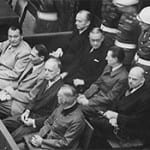
A new book by Human Rights Center co-authors Koenig, Stover, and Peskin explores the diplomatic and military strategies that states have adopted to pursue and capture war crimes suspects. From Nazi war criminals to today’s terrorists, it’s a story fraught with broken promises, backroom politics, and daring escapades.

The treatment of captured Americans by the British during the 1775-‘83 Revolutionary War remains largely unexplored in legal scholarship. Until now. Amanda Tyler studies the legal status of colonialists during this upheaval and links it to adoption of the Suspension Clause in the U.S. Constitution.

In his book, On War and Democracy, Chris Kutz examines the moral justifications democracies often invoke to wage war. He argues that war is not a tool to promote egalitarian values and bemoans the slide toward the borderless, seemingly endless campaigns of violence, surveillance, and remote killings.

Catherine Albiston, Lauren Edelman, and Joy Milligan propose a new metaphor for the dispute resolution process: the dispute tree. They say it’s better than the dispute pyramid metaphor because it represents the multiplicity of options, while reflecting the living and evolving nature of disputes.

Dan Farber says the EPA faces a difficult task in crafting regulatory solutions for interstate air pollution. His new paper explains how the practices of upwind states can prevent downwind states from meeting air quality levels mandated by federal law—and how a recent Supreme Court ruling may impact cost assessment.

Professor and legal counsel john a. powell co-authored a friend-of-the-court SCOTUS brief for 35 prominent social scientists, including Dr. Vicki Plaut, in Fisher v. University of Texas. The brief supports the use of race in university admissions policies to achieve diversity and equal opportunity for all students.

In The Double-Edged Sword of Withdrawal Rights, Prof. Ken Ayotte adds to the ongoing debate about corporate bankruptcy. He analyzes companies that try to avoid bankruptcy’s provisions, like the automatic stay on creditor collections, by organizing their major assets into separate legal entities.

As more lawyers file merger suits in states known for favorable verdicts, other states seeking to attract such litigation are awarding higher attorney’s fees and dismissing fewer cases. A paper co-written by Steven Davidoff Solomon says the resulting competition is impacting legal strategies—and judicial rulings.